
Nieuws
Civil society representatives elected for GPE board
05-03-2015, GPE | One-hundred and ninety education advocates from 91 countries convened this past week in Johannesburg as part of the Global Campaign for Education (GCE) World Assembly. meeting saw the elections of representatives from the International/Northern Civil...
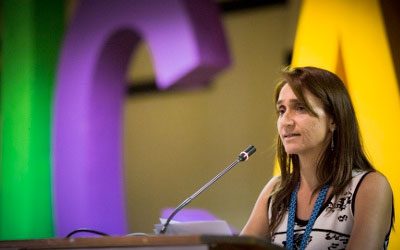
World Assembly of GCE – the world’s biggest organised social movement
05-03-2015, GCE | The Global Campaign for Education’s Fifth World Assembly, held in Johannesburg, South Africa 23-26 February 2015, brought together 190 delegates representing civil society campaigns fighting for the right to education across 91 countries. GCE...
Hoe jongeren een bestuurszetel kregen bij de GCE
04-03-2015, NJR | Afgelopen week was ik op uitnodiging van GCE-Nederland in Johannesburg. Om precies te zijn: ik zat op een afgesloten conferentiecompound tussen Johannesburg en Pretoria om ‘de jongere’ te zijn. De enige youth delegate op de belangrijkste bijeenkomst...
A new tool to build solid education sector plans
29-01-2015, GPE | GPE partners have updated a decision-making tool to help governments diagnose their systems, generate evidence-based policy dialogue and inform their policy reforms. Each of the 59 developing countries that joined the Global Partnership for Education...
The Investment Case for Education and Equity
26-01-2015, UNICEF | Education is in crisis worldwide. Millions of children, especially the most marginalized, are excluded from school. Many millions more attend school, but they do not learn basic reading and math skills. In addition, international funding for...
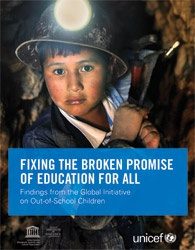
Fixing the broken promise of Education for All
22-01-2015, UNESCO & UNICEF| The Out-of-School Children Initiative (OOSCI), a partnership between UNICEF and UNESCO’s Institute for Statistics, works in more than 30 countries to identify which children are out of school, why they are out of school and what...
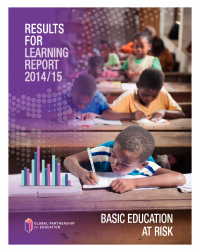
New GPE report shows: basic education at risk
22 januari 2015 | GPE | The new 2014/15 Results for Learning Report shows that developing county partners of the Global Partnership for Education have made good progress in getting more children in school for a quality education. But despite this progress, many...
Reflections on the Nobel Peace Prize for Malala and Kailash
10 december 2014 | GCE-Int | On 10th December Malala Yousafzai and Kailash Satyarthi will attend the ceremonies to receive the joint Nobel Peace Prize for 2014. Much has been made of the decision to choose an Indian and a Pakistani, a Muslim and a Hindu, an older man...
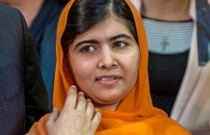
Nobelprijs: alle Nederlanders een beetje winnaar
08 december 2014 | Hoe vaak zal het voorkomen dat je je een beetje Nobelprijswinnaar kunt wanen? Dat je je aangesproken voelt omdat je hebt bijgedragen aan dezelfde zaak als de ontvanger van deze prestigieuze prijs? Dit jaar kunnen alle Nederlanders zich een beetje...
Education and disabilities: draw your life
Education and disabilities: draw your life 02 december 2014 | GEFI | The countdown has begun to the official launch of a global campaign to raise children’s and youth’s awareness of disabilities and inclusion. Led by the United Nations Global Education First...
GCE 2013 | A taxing business; financing Education for All through domestic resources
The reports identifies four major steps towards achieving increased domestic resources, primarily through improved taxation and revenue-generation from natural resources, and the vast impact this could make on ensuring quality, public education for all. Download the...
GCE 2013 | Education Aid Watch Report
GCE's Education Aid Watch 2013 looks at the efforts of 11 donor countries in which the GCE has an active coalition – Australia, Canada, Denmark, France, Germany, Ireland, Japan, the Netherlands, Spain, the UK and the USA. It contains a detailed national profile for...
GCE 2012 | A more ambitious, effective Global Partnership for Education
The Global Partnership for Education (GPE) has become a major player in education aid; it has significant strengths but also major weaknesses. This briefing, co-authored by GCE and Oxfam International and published by 5 global/regional networks and 9 INGOs across the...
GCE 2011 |Fund the Future; education rights now
This report calls for urgent increases and improvements in aid to education if the world is to have any chance of meeting the Education for All goals by 2015. Despite recent gains in education, 61 million children are still without the chance of an education. The...
GCE 2010 |Back to school: world’s worst places to be a school child
Somalia and Haiti have topped a list of the world's worst places to be a school child in this report from the Global Campaign for Education, backed by organisations including Education International, Oxfam, Plan, Save the Children and VSO warned that poor countries...
GCE 2009|Education on the brink
This report, written in the midst of the global economic crisis, makes the case for investment in education. It outlines the obstacles to expanding investment in education – and scrutinises how the traditional policy conditions and recent policy changes made by the...
GCE 2008 | School Report Card 2008; no excuses
We have scored rich country donors against their part of the Dakar promise, that ‘no country seriously committed to Education For All should be thwarted in this ambition for lack of resources.’ 22 OECD-DAC countries are ranked in this way and the picture created by...
GCE 2007 | School Report Card 2007; not up to scratch
Each year, GCE holds donor governments to account for their promises on education, using this ‘School Report’ as the method to benchmark their performance. In 2007, campaigners and learners, parents and children, were expecting to see rich nations race for the...
GCE 2006 | School Report Card 2006; underachievers
In this report, we examine the performance of donor nations in living up to their side of the commitments, using figures made available by the OECD Development Assistance Committee. We identify the stars and the stragglers; those who have made courageous efforts to...
GCE 2005 | School Report Card 2005; missing the mark
To reach the Millennium Development Goals on education, both developing and developed countries will have to work together to do more, do it faster, and do it better. The introduction to our 2005 report card reviews current aid to basic education against the promises...